
GLOW Peptide Therapy: GHK-Cu, BPC-157, and TB-500 for Regeneration, Skin Health, and Hair Support 💇♀️
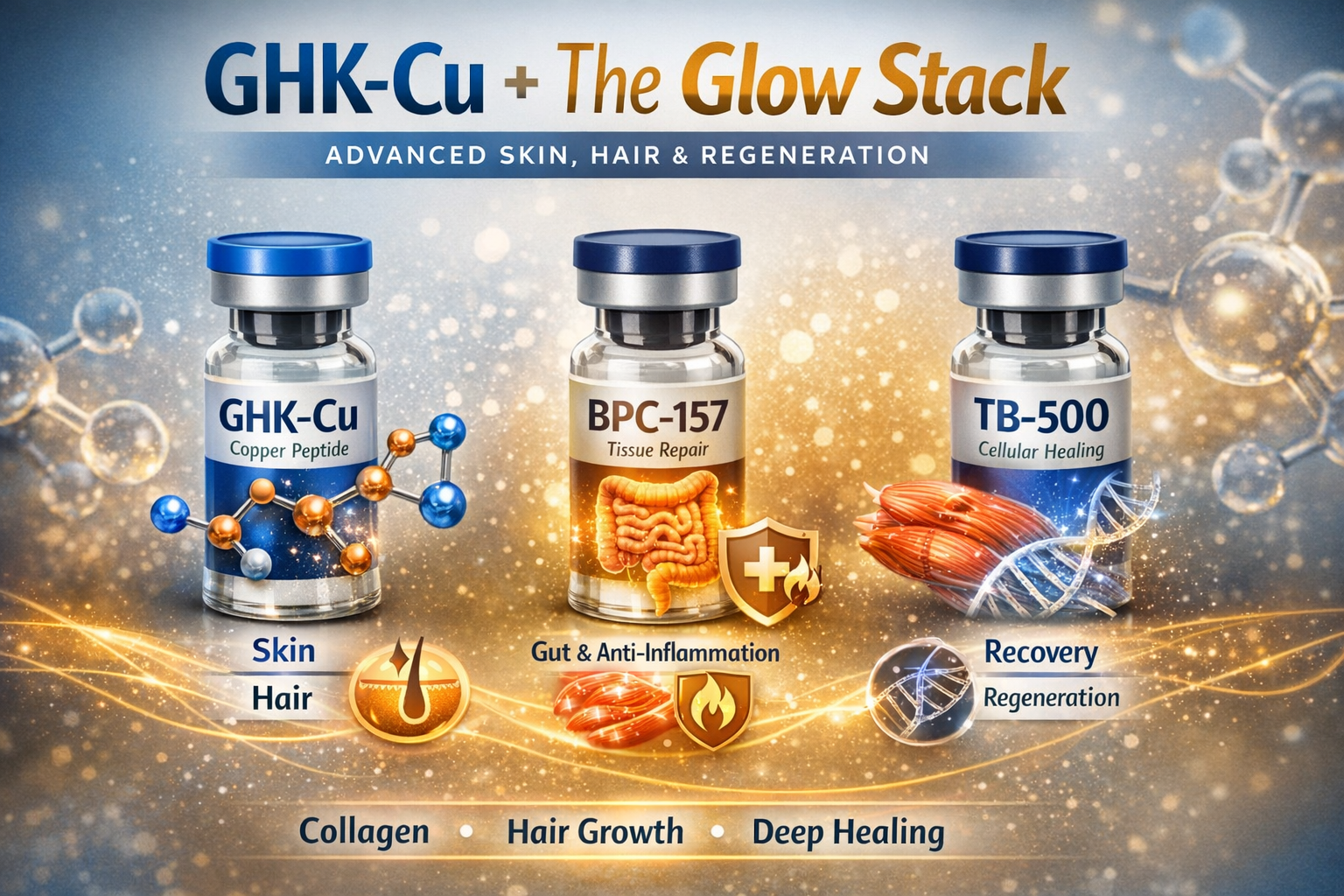
GLOW: GHK-Cu Peptide Stack - GHK-Cu + BP-157 + TB-500
Peptides are becoming one of the most exciting areas of research in regenerative and functional medicine. These small signaling molecules (amino acids) act as messengers in the body, helping regulate healing, inflammation, cellular repair, and tissue regeneration.
One compounded peptide therapy that has been gaining attention is a blend sometimes referred to as GLOW, which combines three powerful peptides:
GHK-Cu (Copper Peptide)
BPC-157
TB-500 (Thymosin Beta-4 fragment)
This injectable formulation is designed to support the body’s natural healing pathways, improve tissue regeneration, and potentially support skin and hair health.
Let’s take a closer look at how this peptide blend works and why these three peptides are often combined.
What Is the GLOW Peptide Injectable?
The GLOW injectable is a compounded peptide formula typically prepared in the following concentration:
GHK-Cu / BPC-157 / TB-500
9 mg / 1.66 mg / 3.33 mg per mL
3 mL vial
These peptides are administered under the guidance of a medical provider and are often used in protocols focused on regeneration, recovery, and longevity support.
Each peptide in this blend works on different aspects of cellular repair and healing.
GHK-Cu: The Copper Peptide for Skin, Hair, and Tissue Repair
GHK-Cu is a naturally occurring peptide in the body that binds copper. It was first identified in human plasma and plays a role in wound healing, collagen production, and tissue remodeling.
Levels of GHK-Cu decline as we age, which may contribute to slower healing and changes in skin quality.
Research suggests GHK-Cu may support:
collagen and elastin production
skin regeneration
reduction of inflammation
tissue remodeling
stimulation of hair follicles
Because of these effects, GHK-Cu has been widely studied in anti-aging skincare and hair restoration therapies.
Some research even suggests the peptide may help activate genes involved in tissue repair and regeneration.
Research resource:
Pickart L. & Margolina A.
Regenerative and Protective Actions of the GHK-Cu Peptide in the Light of the New Gene Data
https://www.ncbi.nlm.nih.gov/pmc/articles/PMC4508379/
BPC-157: A Peptide for Tissue and Gut Healing
BPC-157 stands for Body Protection Compound-157, a peptide derived from a protective protein found in the stomach.
It has gained interest because of its potential ability to support healing in multiple tissues.
Research suggests BPC-157 may help support:
tendon and ligament healing
muscle recovery
gut lining repair
angiogenesis (formation of new blood vessels)
reduction of inflammation
These properties make BPC-157 particularly interesting for individuals recovering from injuries or dealing with chronic inflammation.
Research resource:
Sikiric P. et al.
Stable Gastric Pentadecapeptide BPC-157 in Therapy of Gastrointestinal and Other Organ Damage
https://pubmed.ncbi.nlm.nih.gov/20632284/
TB-500 (Thymosin Beta-4): Cellular Repair and Regeneration
TB-500 is a synthetic version of a naturally occurring peptide called Thymosin Beta-4, which is present in many tissues in the body.
This peptide plays an important role in cell migration, tissue repair, and inflammation regulation.
Research suggests TB-500 may help support:
tissue regeneration
wound healing
reduced inflammation
improved flexibility and recovery
angiogenesis (formation of new blood vessels)
One of the unique aspects of TB-500 is its ability to help direct repair cells to areas of injury, supporting faster recovery.
Research resource:
Goldstein AL & Kleinman HK.
Advances in the basic and clinical applications of thymosin beta-4
https://pubmed.ncbi.nlm.nih.gov/16831544/
Why These Peptides Are Combined
Each peptide in the GLOW blend supports a different component of regeneration.
Together they may provide synergistic support for healing and tissue repair.
GHK-Cu primarily supports:
skin health
collagen production
hair follicle stimulation
BPC-157 focuses on:
tissue healing
gut health
inflammation reduction
TB-500 helps support:
cellular migration
tissue regeneration
recovery and flexibility
By combining these peptides, the protocol may support multiple healing pathways simultaneously.
Potential Benefits Being Explored
Under medical supervision, some people explore peptide blends like GLOW for:
skin rejuvenation
hair thinning support
recovery from injury
joint and tendon healing
inflammation reduction
athletic recovery
overall regenerative support
Research in this area continues to evolve, but peptides are becoming an increasingly interesting area within longevity and regenerative medicine.
The Importance of Pharmaceutical-Grade Peptides
One important factor when considering peptide therapy is quality and sourcing.
Pharmaceutical-grade peptides from licensed compounding pharmacies undergo quality control, sterility testing, and regulated production standards.
Products sold online as research peptides may not contain the ingredients or purity levels listed on the label.
Using properly compounded peptides helps ensure:
accurate dosing
sterility
stability
safety
Peptides Are Only One Piece of the Puzzle
While peptide therapy can be powerful, it works best when combined with strong health foundations.
Supporting the body with proper nutrition, sleep, and metabolic health helps create the environment where regeneration can occur.
This may include focusing on:
adequate protein intake
micronutrients such as zinc and iron
hormone balance
stress management
gut health
regular movement and exercise
A personalized approach often produces the best results.
Why Gut Health, Nutrients, and Hormones Matter for Regeneration
While peptide therapies like GHK-Cu, BPC-157, and TB-500 are designed to support the body’s repair pathways, it’s important to remember that true regeneration starts with the internal environment of the body.
If the body is dealing with chronic inflammation, nutrient deficiencies, or gut dysfunction, healing processes may be slower or less effective.
This is one reason why a functional medicine approach looks beyond symptoms and focuses on the systems that influence cellular health.
Three areas that are particularly important include:
Gut Health
The gut plays a major role in nutrient absorption, immune regulation, and inflammation control. When gut health is compromised, it can impact many other systems in the body.
Issues such as:
intestinal permeability (“leaky gut”)
dysbiosis (imbalanced gut bacteria)
chronic digestive inflammation
poor nutrient absorption
can affect the body’s ability to repair tissue and maintain healthy skin, hair, and connective tissue.
Interestingly, BPC-157 itself has been studied for its potential ability to support gut healing, which is one reason it is included in some regenerative protocols.
Research overview on BPC-157 and gut healing:
https://pubmed.ncbi.nlm.nih.gov/20632284/
Nutrient Status
Many vitamins and minerals are essential for healthy hair, skin, and tissue repair.
Common nutrient deficiencies associated with hair thinning or slow tissue recovery include:
iron
zinc
vitamin D
B vitamins
essential fatty acids
amino acids
If these nutrients are low, the body may prioritize essential functions over hair growth or skin repair.
Testing can help identify deficiencies that may be contributing to symptoms.
Hormonal Balance
Hormones play a major role in skin quality, hair growth, metabolism, and overall vitality.
Hormonal imbalances—particularly involving thyroid function, cortisol, estrogen, testosterone, and DHEA—can influence:
hair thinning
fatigue
slow healing
changes in skin elasticity
metabolic health
This is why many functional medicine practitioners recommend hormone and metabolic lab testing to better understand what is happening beneath the surface.
How Functional Medicine Lab Testing Can Help
Rather than guessing, functional medicine labs can provide deeper insights into what may be affecting your health.
Some commonly used lab tests may evaluate:
nutrient levels
hormone balance
inflammation markers
metabolic health
thyroid function
gut health and microbiome balance
This information can help guide a personalized strategy for improving health at the root level.
Where Health Coaching Fits In
Once underlying factors are identified, a health coach can help translate lab insights into practical daily habits that support healing.
This may include guidance around:
anti-inflammatory nutrition
improving protein and micronutrient intake
gut repair protocols
stress management strategies
sleep optimization
lifestyle habits that support metabolic health
In some cases, protocols may include targeted nutritional strategies, gut-supportive protocols, or detox-style programs designed to reduce inflammation and support digestive health.
When these foundations are addressed, the body often becomes much more responsive to regenerative therapies such as peptides.
A Personalized Approach Works Best
Peptides like GHK-Cu, BPC-157, and TB-500 can play a role in supporting regeneration, but they work best when combined with strong health foundations.
Looking at the full picture—gut health, nutrient status, hormones, and lifestyle—often provides the most effective path toward long-term vitality.
This type of root-cause approach is central to functional medicine and personalized health coaching.
Signs Your Body May Need Additional Regenerative Support
Many people begin exploring regenerative therapies such as peptides because they notice subtle changes in their body over time. These changes are often signals that the body may need additional support for repair, recovery, or metabolic balance.
Some common signs that the body’s regenerative capacity may be under stress include:
Slower Recovery from Exercise or Injury
If muscles, tendons, or joints seem to take much longer to recover than they used to, it may indicate that tissue repair processes are slowing down.
Peptides such as BPC-157 and TB-500 are often explored in regenerative protocols because of their potential role in supporting tissue repair and recovery.
Hair Thinning or Changes in Skin Quality
Hair follicles and skin cells regenerate constantly. When cellular repair slows, people may notice:
increased hair shedding
thinning hair
reduced skin elasticity
slower wound healing
Peptides like GHK-Cu have been studied for their potential role in supporting collagen production and tissue regeneration.
Research on copper peptides and tissue repair:
https://www.ncbi.nlm.nih.gov/pmc/articles/PMC4508379/
Chronic Inflammation
Low-grade inflammation can interfere with many biological processes, including healing, hormone signaling, and metabolism.
Signs of chronic inflammation may include:
joint discomfort
persistent fatigue
digestive symptoms
brain fog
slower recovery after illness or injury
Addressing inflammation through nutrition, gut health support, and lifestyle changes can significantly improve the body's ability to regenerate.
Fatigue and Reduced Energy
When the body is under stress—whether from poor sleep, chronic inflammation, nutrient deficiencies, or hormonal imbalance—energy production at the cellular level can decline.
This can contribute to symptoms such as:
persistent fatigue
difficulty recovering from physical activity
mental fatigue or brain fog
Supporting mitochondrial health, improving metabolic balance, and optimizing lifestyle habits can help restore energy production.
Hormonal Changes
Hormones play an important role in tissue repair, metabolism, skin health, and hair growth.
Changes in hormones during perimenopause, menopause, chronic stress, or aging can influence how well the body regenerates.
This is another reason why comprehensive lab testing can be helpful when developing a personalized health strategy.
The Goal: Supporting the Body’s Natural Repair Systems
The body has remarkable regenerative capabilities. The goal of therapies such as peptides is not to replace the body’s natural processes but to support the signaling pathways that already exist within the body.
When combined with:
strong nutrition
gut health support
balanced hormones
healthy sleep patterns
regular movement
many people experience improvements in recovery, skin health, hair vitality, and overall well-being.
Interested in Learning More About Peptide Therapy?
Peptides are a rapidly evolving area of medicine, and they can be used as part of a broader strategy to support healing, recovery, and longevity.
If you’re interested in exploring whether peptide therapy may be appropriate for your health goals, working with a qualified practitioner can help determine the best approach.
You can learn more or schedule a consultation here:
Additional Educational Resources
For readers interested in learning more about peptide research and regenerative medicine:
Peptides and regenerative medicine overview
https://www.ncbi.nlm.nih.gov/pmc/articles/PMC7795891/
Huberman Lab Podcast – Peptides and Growth Factors
https://hubermanlab.com
Dr. Mark Hyman – Introduction to Peptides
https://drhyman.com/blogs/content/peptides-101
