
DSIP Peptide for Sleep: Can It Help You Finally Get Restorative Sleep?
If you've ever felt exhausted but unable to shut your brain off at night, you're not alone.
Many people struggle with a frustrating pattern of feeling tired all day, only to become alert and restless when it's finally time to sleep. They wake between 2:00 and 4:00 a.m., toss and turn for hours, and start each day feeling like they never truly rested.
For some individuals, the problem isn't simply a lack of sleep—it's a lack of deep, restorative sleep.
One peptide that has gained attention in functional and peptide medicine for supporting sleep quality is Delta Sleep-Inducing Peptide (DSIP).
What Is DSIP?
Delta Sleep-Inducing Peptide (DSIP) is a naturally occurring neuropeptide made up of nine amino acids. It was first identified because of its apparent relationship to sleep regulation, particularly deep sleep.
Unlike prescription sleep medications, DSIP is not a sedative, hypnotic, or sleeping pill. It doesn't force sleep the way medications such as benzodiazepines or zolpidem do.
Instead, DSIP appears to work by supporting the body's natural sleep architecture and helping promote healthy delta-wave sleep patterns.
Delta-wave sleep is the deepest stage of non-REM sleep and is when much of the body's repair, recovery, and regeneration occur.
How Does DSIP Work?
Researchers continue to study DSIP, and its exact mechanism is not fully understood. However, current evidence suggests it may influence several pathways involved in sleep and stress regulation.
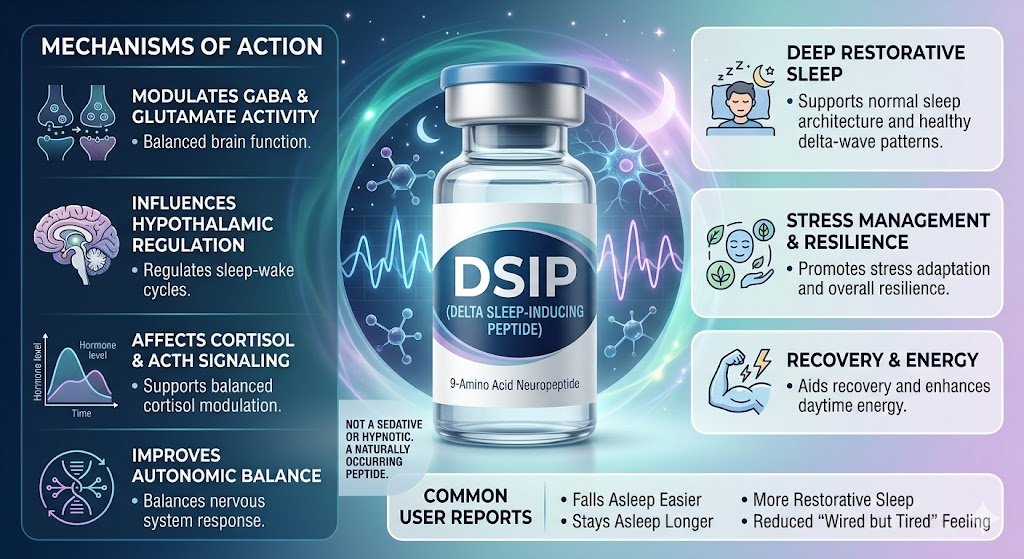
Potential mechanisms include:
Supporting healthy hypothalamic regulation of sleep-wake cycles
Modulating GABA and glutamate activity
Influencing cortisol and ACTH signaling
Supporting autonomic nervous system balance
Promoting healthy delta-wave sleep activity
Because sleep, stress hormones, and nervous system regulation are closely connected, many practitioners find DSIP particularly helpful for individuals whose sleep issues are driven by stress and hyperarousal.
Potential Benefits of DSIP
Many people who respond well to DSIP report improvements such as:
Falling Asleep More Easily
Rather than lying awake with racing thoughts, users often notice a greater ability to relax into sleep naturally.
Staying Asleep Longer
Frequent nighttime waking can significantly reduce sleep quality. DSIP may help support more continuous sleep throughout the night.
More Restorative Sleep
Many individuals describe feeling more refreshed and recovered upon waking, even when total sleep time remains similar.
Reduced "Wired But Tired" Feelings
One of the most common complaints in high-stress individuals is feeling exhausted physically while mentally overstimulated. DSIP may help support a healthier balance between stress and recovery.
Improved Recovery and Resilience
Because deep sleep is critical for tissue repair, hormone balance, immune function, and nervous system recovery, improving sleep quality may have wide-ranging benefits throughout the body.
Who May Benefit Most From DSIP?
In clinical practice, the best responders often include people who experience:
Difficulty shutting their brain off at night
High stress levels
Elevated evening cortisol
Frequent waking between 2:00 and 4:00 a.m.
Burnout
Shift-work recovery challenges
Poor recovery from intense exercise
Chronic nervous system dysregulation
When DSIP May Not Be Enough
DSIP is not a magic solution for every sleep issue.
Individuals whose sleep disturbances are primarily caused by:
Sleep apnea
Restless leg syndrome
Significant chronic pain
Poor sleep hygiene
Excessive caffeine or alcohol intake
may see limited benefit unless those root causes are addressed as well.
This is why a comprehensive approach to sleep optimization is so important.
Common Ways Practitioners Use DSIP
Functional and peptide medicine practitioners frequently utilize DSIP for:
Sleep maintenance insomnia
Frequent nighttime waking
Elevated nighttime cortisol
Chronic stress
Burnout
Recovery support
Nervous system regulation
DSIP Stacking Options
For Sleep Support
Many practitioners combine DSIP with:
Magnesium glycinate
L-theanine
For Stress and Burnout
Common combinations include:
DSIP + Semax
DSIP + NAD+
DSIP + adaptogenic herbs
For Recovery and Performance
Some individuals combine DSIP with:
CJC-1295/Ipamorelin
BPC-157
The ideal protocol depends on the individual's goals, symptoms, and overall health picture.
Typical DSIP Dosing
A commonly prescribed protocol is:
DSIP: Inject 0.2 mL (20 units) subcutaneously approximately 60 minutes before bedtime.
Always follow the dosing instructions provided by your healthcare practitioner.
The Bottom Line
Quality sleep is one of the most powerful tools we have for healing, recovery, hormone balance, cognitive function, and overall health.
For individuals struggling with stress-related sleep disturbances, elevated nighttime cortisol, burnout, or that frustrating "wired but tired" feeling, DSIP may offer a unique way to support the body's natural sleep processes without functioning as a traditional sleeping pill.
While it is not a substitute for addressing underlying causes of poor sleep, DSIP can be a valuable tool as part of a comprehensive sleep and recovery strategy.
Interested in Learning Whether DSIP Is Right for You?
At 1st Optimal, we take a root-cause approach to sleep, stress, hormones, gut health, and recovery. If you're struggling with poor sleep, frequent nighttime waking, or burnout, we'd love to help you identify the underlying factors and create a personalized plan to support long-term health and resilience.
