
What Is BPC-157? Peptide for Healing, Gut Health, and Recovery 💉
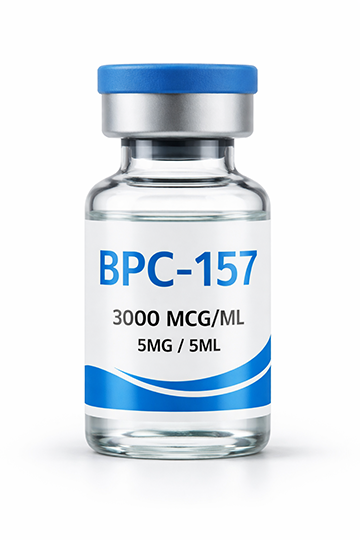
Peptide of the Week: BPC-157 - Which stands for Body Compounding Protection - 157
This week I’m learning more about BPC-157, a peptide researchers have been studying for tissue repair, inflammation, and gut health.
Peptides are becoming an interesting area of research in regenerative and longevity medicine. One peptide that continues to get attention is BPC-157, particularly a modified version called N-Acetyl BPC-157.
BPC-157 stands for Body Protection Compound-157, a synthetic peptide derived from a protein naturally found in human gastric juice. Researchers have been studying this peptide for its potential role in tissue repair, inflammation support, and gastrointestinal health.
You can explore current research on this peptide through the 👉 PubMed database for BPC-157 research
What Is N-Acetyl BPC-157?
N-Acetyl BPC-157 is a modified form of BPC-157 designed to increase stability and bioavailability.
The N-acetyl modification helps make the peptide more resistant to breakdown, which may allow it to remain active longer in the body compared to standard BPC-157.
Research on BPC-157 has been published in journals such as 👉 Current Pharmaceutical Design – BPC-157 research
In clinical settings, it is sometimes compounded in concentrations such as 3000 mcg/mL (3 mg/mL).
This higher concentration allows small injection volumes for dosing protocols.
For example:
A 0.1 mL injection (10 units on an insulin syringe) would deliver 300 mcg of peptide.
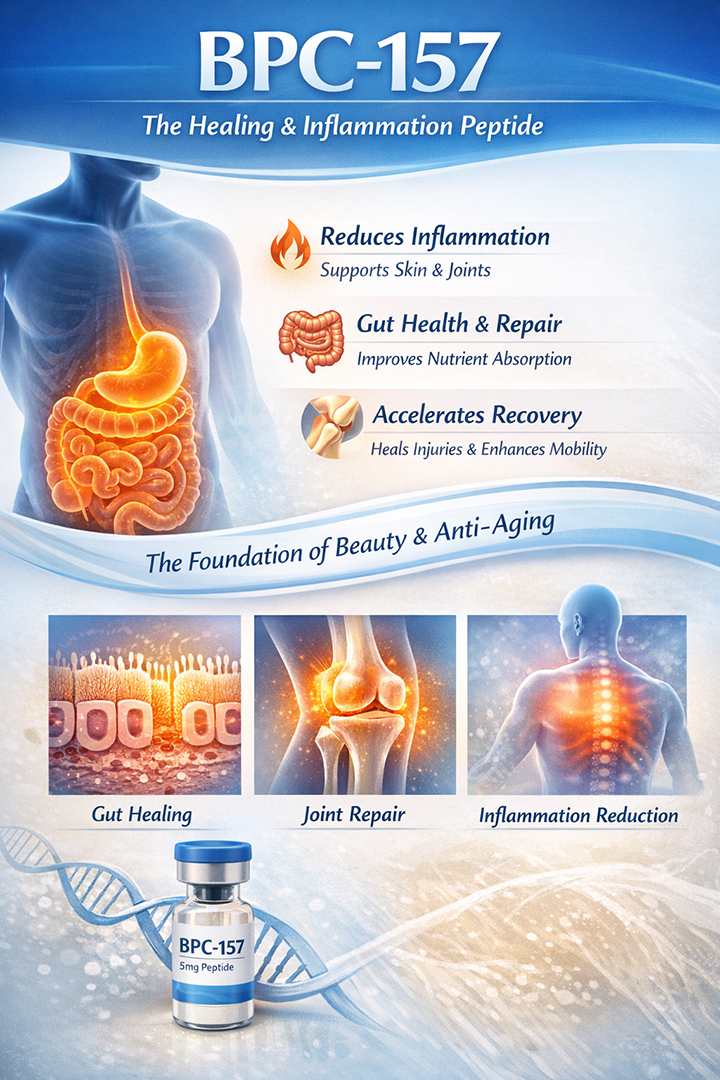
What BPC-157 Is Being Studied For
Most research on BPC-157 currently comes from animal and preclinical studies, but findings have been promising in several areas.
Tissue Repair and Injury Recovery
BPC-157 has been studied for its potential to support healing of:
muscles
tendons
ligaments
nerves
Researchers believe this may be related to its influence on angiogenesis, the formation of new blood vessels that deliver oxygen and nutrients to injured tissue.
You can read one example here:
👉 study on BPC-157 and vascular healing
Because of these mechanisms, BPC-157 has gained interest in injury recovery and musculoskeletal repair.
Anti-Inflammatory Effects
Some research suggests BPC-157 may influence inflammatory signaling pathways and nitric oxide activity involved in healing.
These mechanisms may help explain why the peptide is being studied for its potential to reduce inflammation and support tissue repair.
Additional studies can be explored through 👉 NIH PubMed peptide research database
Gut and Digestive Health
One of the most interesting areas of research involves gastrointestinal healing.
Because BPC-157 originates from a compound found in gastric juice, researchers have explored its impact on:
gut lining integrity
digestive inflammation
ulcer healing
Some studies suggest it may support intestinal barrier function and mucosal repair, though more human research is still needed.
Typical Clinical Protocols
When compounded at 3000 mcg/mL, BPC-157 protocols commonly fall within the range of:
200 – 1,000 mcg per day
A common protocol for injury recovery is:
300–500 mcg daily
Administration is typically through subcutaneous injection, though protocols vary depending on individual health goals and physician guidance.
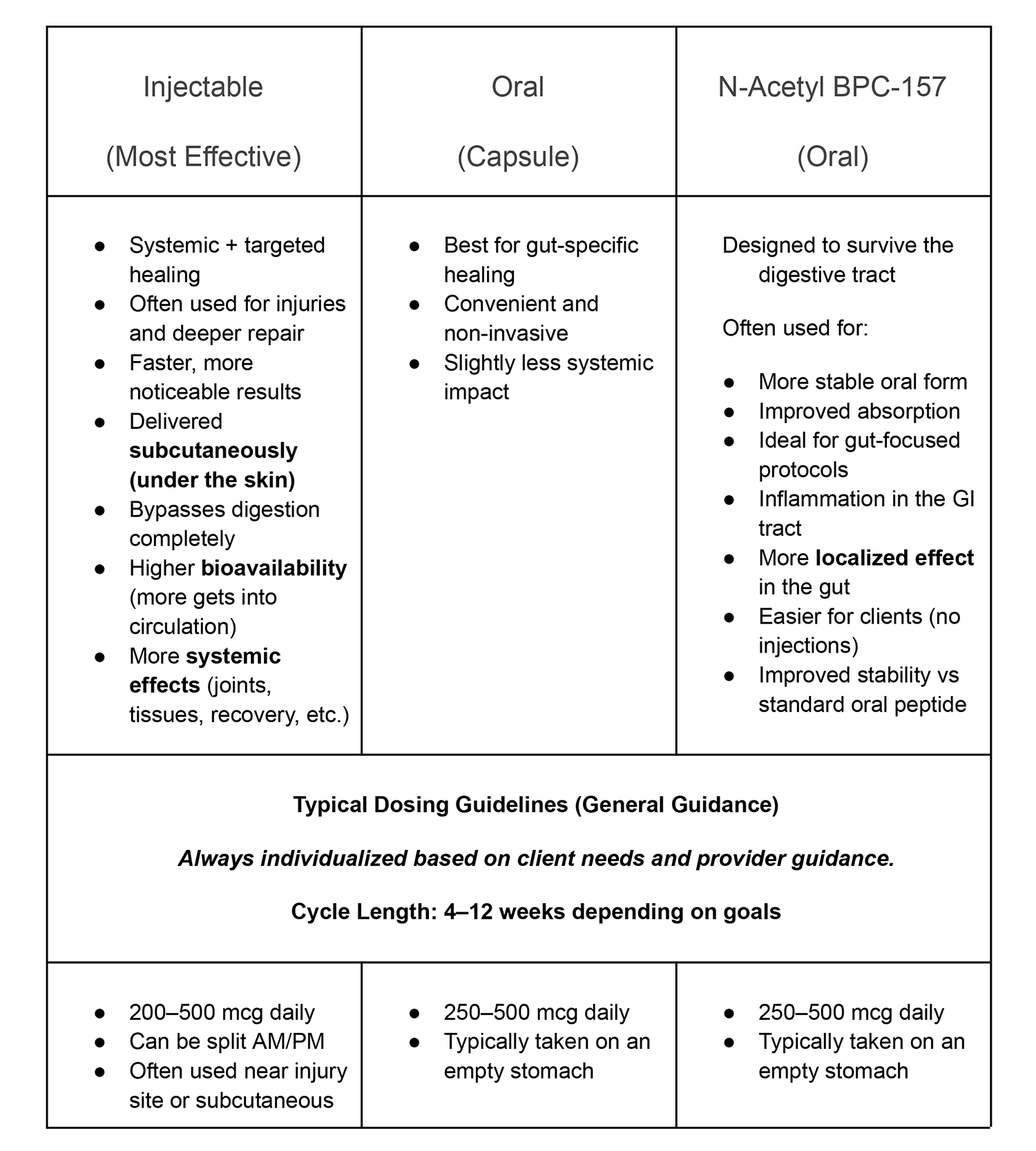
Injectable vs. Oral
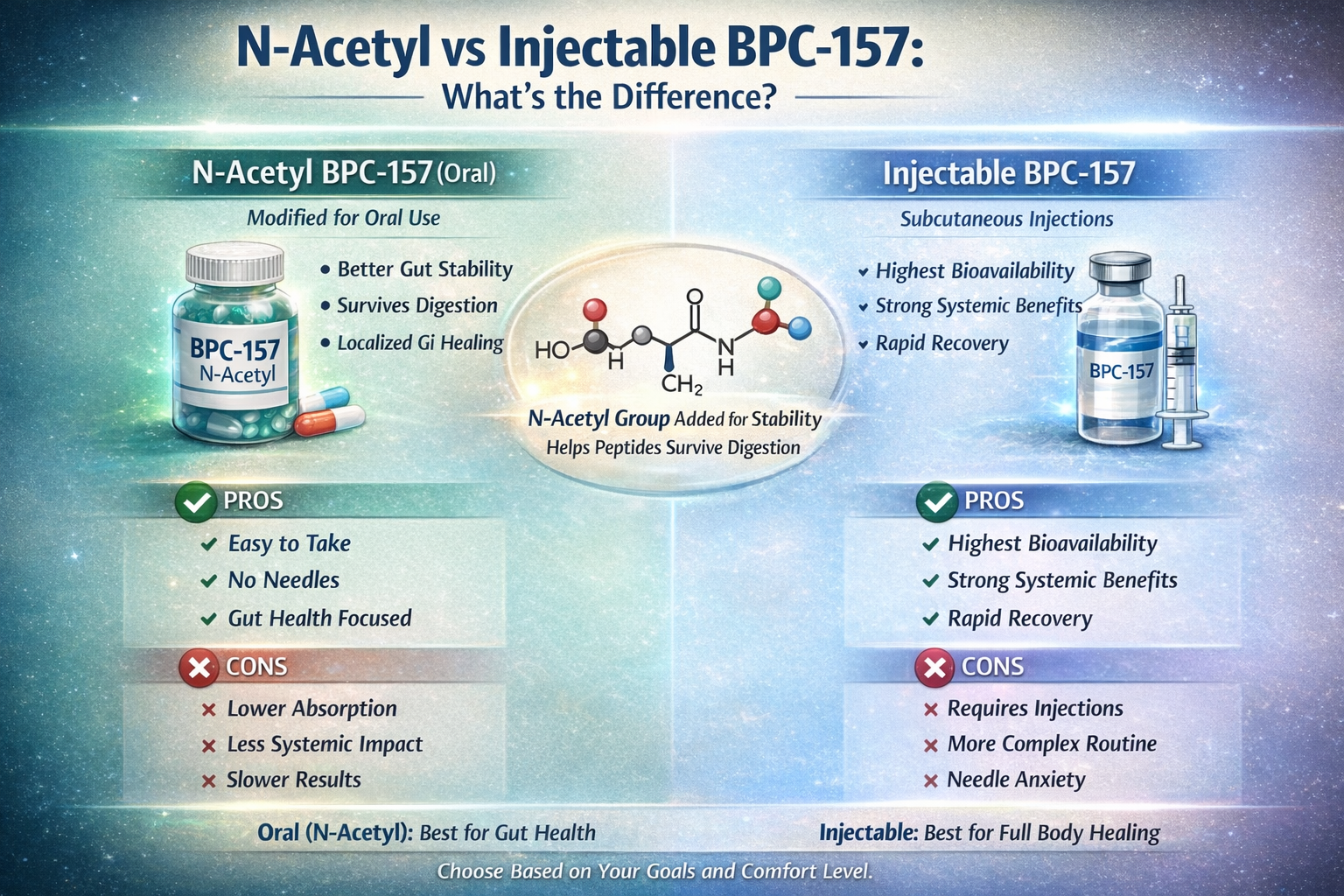
N-Acetyl vs. Injectable
Safety and Research Status
While BPC-157 has shown promising results in research models, it is important to understand that:
most current studies are preclinical
human data remains limited
it is still considered an investigational peptide
For this reason, peptide therapies should always be used under medical supervision.
Why the Source of Peptides Matters
As interest in peptides has grown, many people discover them through online forums or websites selling what are labeled “research peptides.”
These products are often marketed for laboratory use only and are not intended for human use. Because of this, they may not be produced under the same quality standards required for medications prepared by licensed pharmacies.
This matters more than most people realize.
When peptides are obtained through a medical provider, they are typically prepared by licensed compounding pharmacies that follow strict pharmaceutical standards. These pharmacies test for things like:
purity of the compound
correct dosage concentration
sterility and contamination
proper storage and handling
In contrast, peptides sold online as research chemicals may vary widely in quality. Studies examining some of these products have found issues such as incorrect dosing, impurities, or contamination. In some cases, the product may not even contain the amount of peptide listed on the label.
That means people may unknowingly be:
injecting unknown substances
using inaccurate doses
wasting money on ineffective products
potentially exposing themselves to unnecessary health risks
Working with a medical practice that provides pharmaceutical-grade peptides through licensed compounding pharmacies helps ensure that what you are receiving has been prepared under regulated standards for safety and quality.
It also means the peptide is being used as part of a broader health strategy, guided by clinicians who can evaluate your symptoms, health history, and sometimes lab results before recommending a protocol.
Peptides are powerful biological signaling molecules. Because of that, they should be approached thoughtfully and used under appropriate medical guidance rather than purchased blindly online.
Some Podcasts or YouTubes Worth Listening to Learn More
What is BPC-157? The Benefits, Risks, and Research behind BPC-157
Why Work With a Medical Provider for Peptides
As interest in peptides has grown, many people come across “research-grade” peptides sold online. These products are often marketed for laboratory use only and may not be regulated for purity, stability, or proper dosing. They also are not as potent or effective as the pharmaceutical-grade compounds.
Working with a medical provider offers several important advantages.
At 1st Optimal, peptides are pharmaceutical-grade compounds prepared by licensed compounding pharmacies. This means they are produced under strict quality and safety standards to ensure purity, sterility, and accurate dosing.
When peptides are obtained through a medical provider, they also come with:
Medical oversight from licensed clinicians
Pharmaceutical-grade compounding rather than research chemicals
Proper dosing protocols based on clinical experience
Guidance on how peptides fit into a larger health strategy
This is important because peptides work best when they are part of a broader plan that may include:
functional medicine lab testing
nutrition and lifestyle changes
targeted supplementation
ongoing monitoring
Rather than trying to piece things together from information online, working with a provider helps ensure the approach is safe, personalized, and medically supervised.
As a health coach with 1st Optimal, I help clients review their health history, labs, and goals to determine whether peptides may be appropriate and how they might fit into a personalized protocol.
If you're curious about whether peptide therapy could support your health goals, you can schedule a consultation with me below!
This article is for educational purposes only and does not constitute medical advice. Peptides discussed may be considered investigational and should only be used under the supervision of a qualified healthcare provider.
